
Neo-Mercazole (carbimazole) vs methimazole: dose conversion and switching
Carbimazole (Neo-Mercazole) and methimazole compared, with a dose conversion table, which countries use which, and what to do when you move abroad or your pharmacy only stocks the other one.
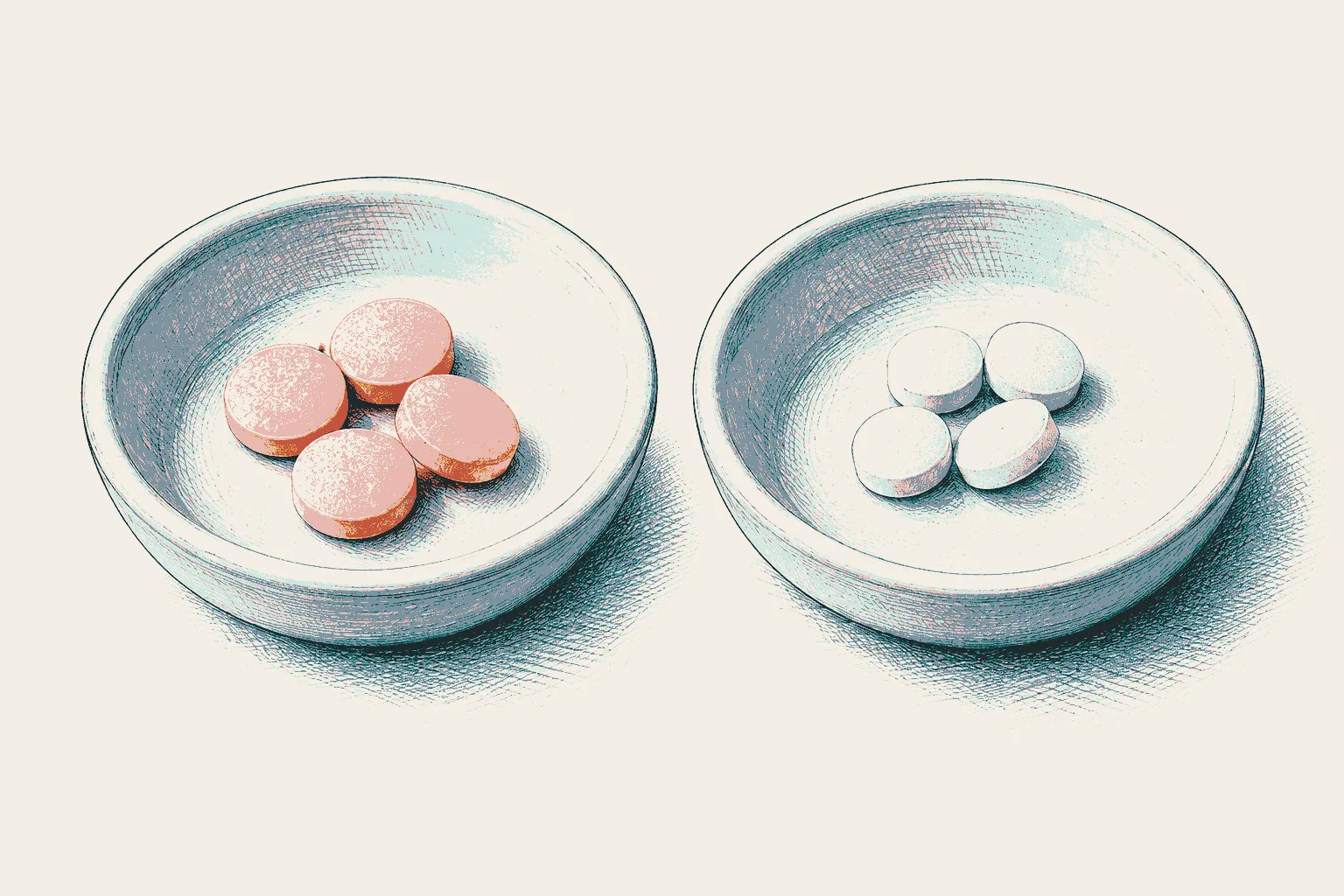
“Should I take Neo-Mercazole or methimazole?” is one of the questions people search most around this medicine. The short answer: they are the same treatment in two packages. Carbimazole (the ingredient in Neo-Mercazole) is a prodrug that the body turns into methimazole. What changes is the number on the box, and which one your country’s pharmacies stock.
Key points
- One active drug: carbimazole is converted almost completely into methimazole after absorption.
- Different milligrams: about 10 mg of carbimazole equals 6 mg of methimazole.
- Same benefits and risks: agranulocytosis, liver and pregnancy warnings apply equally.
- Geography decides: the UK, France, Australia, New Zealand and India use carbimazole; the US and German-speaking Europe use methimazole (thiamazole).
Why they behave the same
Carbimazole has no antithyroid action of its own. The New Zealand Neo-Mercazole data sheet describes 90% to 100% absorption within 15 to 30 minutes and rapid, near-complete conversion to methimazole, the only form found in the blood. A 1983 study in volunteers gave either 15 mg of carbimazole or about 9.2 mg of methimazole (the same number of molecules) and found matching blood levels: peaks at about 0.9 hours for both and half-lives of 5.7 and 5.4 hours. Its authors concluded the two are equipotent on a molar basis. An earlier study in hyperthyroid patients found more variation between people taking carbimazole, which is one more reason to recheck blood tests after a switch.
Dose conversion table
The table converts by molecular weight (methimazole is 61.3% of carbimazole’s weight), which reproduces the 15 mg to 9.2 mg pairing from the study. Real prescriptions get rounded to tablet sizes, usually 5 mg and 10 mg for both drugs.
| Carbimazole (Neo-Mercazole) | Equivalent methimazole | Practical methimazole dose |
|---|---|---|
| 5 mg | 3.1 mg | 2.5 to 5 mg |
| 10 mg | 6.1 mg | 5 mg, or 7.5 mg (1½ × 5 mg) |
| 15 mg | 9.2 mg | 10 mg |
| 20 mg | 12.3 mg | 10 to 15 mg |
| 30 mg | 18.4 mg | 20 mg |
| 40 mg | 24.5 mg | 25 mg |
| 60 mg | 36.8 mg | 35 to 40 mg |
The same logic connects both drugs to propylthiouracil: the Neo-Mercazole data sheet treats 50 mg of PTU as one 5 mg carbimazole tablet. See propylthiouracil.
Who uses which
| Country or region | Usual tablet | Notes |
|---|---|---|
| UK | Carbimazole | Thiamazole (methimazole) is not authorised, per the MHRA |
| Australia, New Zealand | Carbimazole (Neo-Mercazole) | NZ sponsor: AFT Pharmaceuticals |
| India | Carbimazole | Neo Mercazole 5 and 10 mg (Abbott), plus other brands |
| United States | Methimazole | The Tapazole brand is discontinued; generics 5 and 10 mg |
| France | Carbimazole (Néo-Mercazole 5 and 20 mg) | Licence holder Amdipharm |
| Germany, Austria | Thiamazole (Thiamazol, Thyrozol) | 5, 10 and 20 mg tablets |
Moving abroad or changing pharmacy
Pack your last prescription, your most recent thyroid results and an empty box of the tablets; a pharmacist abroad can read a box more easily than a handwritten note. The new doctor converts the dose with a table like the one above and writes it in milligrams of the local drug. A month or so later, have a thyroid test to see whether the new dose fits.
The safety rule travels with you. A sore throat, fever or mouth ulcers still mean stopping the tablets and getting a blood count that day, whatever the box says.
If you had a serious reaction to one (agranulocytosis, hepatitis, pancreatitis or vasculitis), do not try the other: they are the same active drug.
Is one better tolerated?
There is no good evidence that either causes fewer side effects at equivalent doses, which is what you would expect from one active molecule. What matters for side effects is the dose: in Japanese studies, agranulocytosis was about four times more common at 30 mg than 15 mg of methimazole a day (see the studies).
Where to get each
With a prescription: carbimazole as 10 mg tablets from PockDose, 5 and 10 mg from Yasabai or Neo-Mercazole from VGR Australia; methimazole as 5 mg or 10 mg tablets from PockDose and thiamazole from Yasabai. More on methimazole and the full comparison.
Sources
Checked 15 October 2026.
- Comparative bioavailability of carbimazole and methimazole (Jansson et al., 1983) — Int J Clin Pharmacol Ther Toxicol
- The pharmacokinetics of methimazole after oral carbimazole and methimazole in hyperthyroid patients (Skellern et al., 1980) — British Journal of Clinical Pharmacology
- Neo-Mercazole New Zealand data sheet, sections 4.2 and 5.2 — Medsafe (New Zealand)
- Methimazole tablets prescribing information — DailyMed, US National Library of Medicine
- Carbimazole: increased risk of congenital malformations (thiamazole not authorised in the UK) — MHRA Drug Safety Update, February 2019
- 2018 European Thyroid Association guideline for the management of Graves' hyperthyroidism — European Thyroid Journal
- NEO-MERCAZOLE 20 mg, comprimé — Base de données publique des médicaments (France)
- Thyrozol 5/10/20 mg Filmtabletten, Fachinformation — Fachinfo-Service (Germany)
- Hyperthyroidism, overactive thyroid and Graves' disease — Australian Thyroid Foundation
- Neo Mercazole 5 Tablet (manufacturer Abbott Healthcare) — Practo (India)