
Graves' disease: causes, treatment, remission and relapse
Graves' disease is the commonest cause of an overactive thyroid. What triggers it, how it is diagnosed, how antithyroid tablets such as Neo-Mercazole, radioiodine and surgery compare, and what predicts remission.
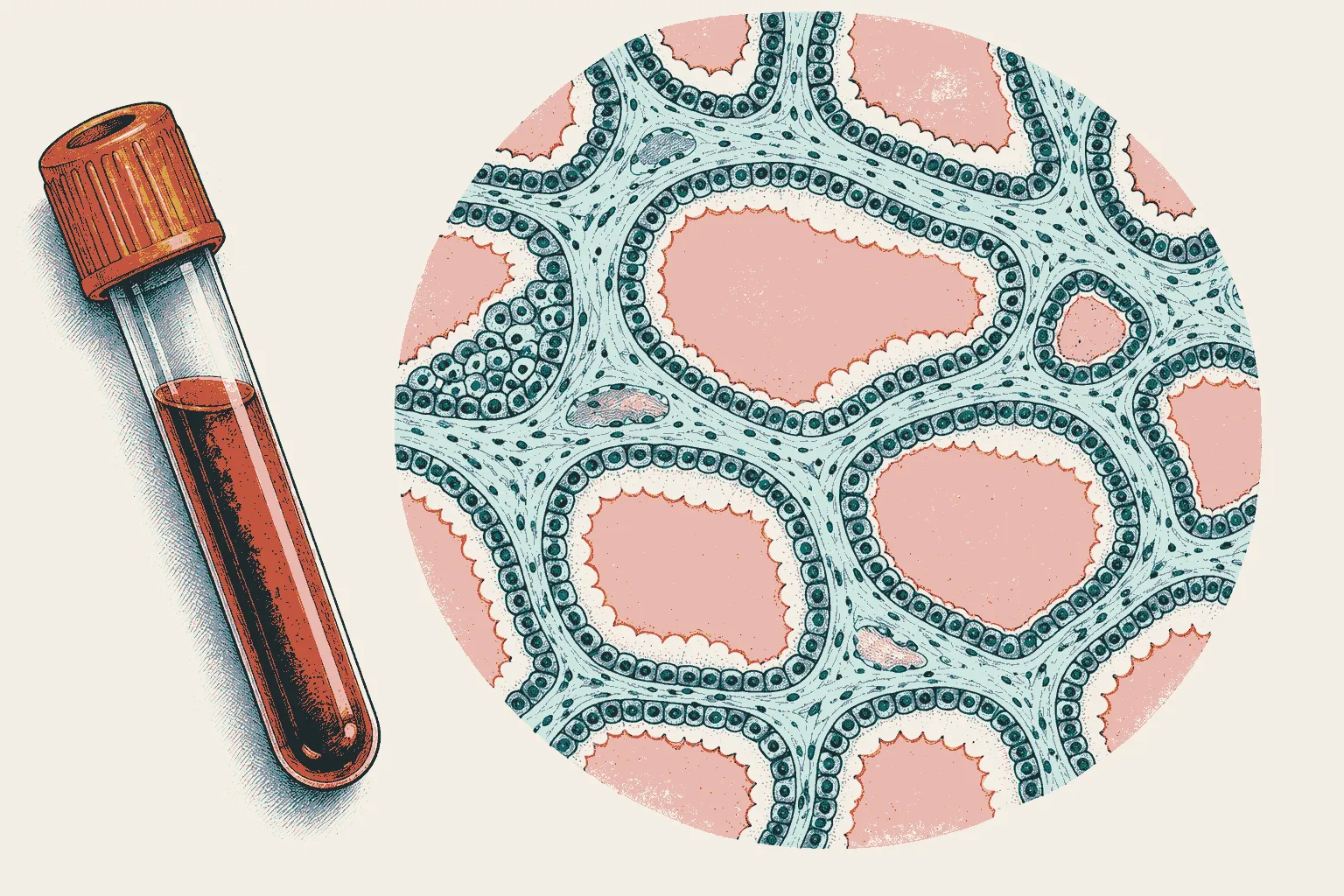
Graves’ disease is the most common cause of an overactive thyroid in Europe, and much more common in women than men. The immune system makes an antibody that mimics the hormone TSH and keeps the thyroid switched on. Neo-Mercazole (carbimazole) and methimazole calm the gland while, in some people, the immune process settles down for good.
Key points
- Autoimmune: TSH receptor antibodies (TRAb) drive the thyroid. They also confirm the diagnosis.
- Risk factors: family history, smoking, and possibly major stress in the preceding year.
- Tablet course: 12 to 18 months gives roughly a 30% to 50% chance of lasting remission.
- Definitive options: radioiodine or surgery, after which most people need lifelong levothyroxine.
- Eyes: between a quarter and 40% of people develop thyroid eye disease, depending on the source.
What causes it
The British Thyroid Foundation describes Graves’ disease as autoimmune, with a strong genetic component, so it tends to run in families. Smokers get it more often, and some people have had a major life stress a year or so before diagnosis. It was named after Robert Graves, the Irish physician who described it in the 19th century.
Besides the general signs of hyperthyroidism, Graves’ disease can cause a smooth goitre and thyroid eye disease. Estimates vary: the NHS says eye problems affect about 1 in 4 people with Graves’, and a British Thyroid Foundation leaflet says about 40%, mostly mild.
Diagnosis
Low TSH and high free T4 show the thyroid is overactive. A positive TRAb test shows the cause is Graves’ disease, and NICE recommends it for this. The European Thyroid Association also recommends TRAb before stopping tablets and during pregnancy.
Treatment choices
| Option | Chance of the overactive thyroid coming back | What you live with afterwards |
|---|---|---|
| Antithyroid tablets, 12 to 18 months | About half relapse (52.7% in a meta-analysis) | A working thyroid if remission lasts |
| Radioactive iodine | About 15% | Usually lifelong levothyroxine |
| Total thyroidectomy | About 10% in the meta-analysis | Lifelong levothyroxine |
Guidelines differ in which they put first. The European Thyroid Association recommends methimazole (or carbimazole) for 12 to 18 months as the usual first treatment. NICE in the UK recommends radioactive iodine as first-line definitive treatment for most adults, with a tablet course offered as an equal choice when remission is likely, for example in mild, uncomplicated disease. Surgery comes first when the goitre is pressing on the windpipe, cancer is suspected, or other treatments are unsuitable. Children usually take tablets for two years or longer.
Antithyroid tablets: getting the most from a course
Carbimazole or methimazole is taken either as a titration regimen or as block and replace, usually for 12 to 18 months; NICE accepts either. See dosage for the detail.
Some things improve the odds of lasting remission:
- Not smoking. The British Thyroid Foundation notes smoking reduces the chance of a cure after a tablet course.
- Taking every dose so blood tests reflect the real response.
- Treating long enough. Under 12 months does worse. A randomised trial in Iran found that continuing low-dose methimazole for 5 to 10 years in total cut relapse four years after stopping to 15%, against 53% after a standard course.
Studies link relapse with a larger goitre, higher hormone and TRAb levels at diagnosis, and TRAb still raised at the end of treatment. A Dutch study combined age, goitre size, free T4 and antibody level into a pre-treatment score (the GREAT score) to estimate relapse risk; the trials disagree on whether younger or older age carries more risk.
If it comes back
NICE suggests considering radioiodine or surgery after a relapse; the European Thyroid Association recommends definitive treatment but accepts long-term low-dose methimazole as an alternative. Tablets also bring levels back under control before radioiodine or surgery, as NICE recommends.
Living with Graves’ disease
Once levels are normal, appetite that matched an overactive metabolism can lead to weight gain, so the British Thyroid Foundation suggests watching portion sizes. Keep up blood tests even when well: after radioiodine or surgery the thyroid often becomes underactive over time, and after a tablet course the disease can return.
Where to get your tablets
With a prescription, carbimazole is listed by PockDose, Yasabai and VGR Australia, and methimazole by PockDose. More on where to buy.
Sources
Checked 15 October 2026.
- Hyperthyroidism (patient leaflet, updated October 2026) — British Thyroid Foundation
- Thyroid eye disease (patient leaflet) — British Thyroid Foundation
- Thyroid disease: assessment and management (NG145), recommendations — National Institute for Health and Care Excellence
- 2018 European Thyroid Association guideline for the management of Graves' hyperthyroidism — European Thyroid Journal
- Increased remission rates after long-term methimazole therapy in Graves' disease (Azizi et al., 2019) — Thyroid
- Comparative effectiveness of therapies for Graves' hyperthyroidism (Sundaresh et al., 2013) — Journal of Clinical Endocrinology & Metabolism
- Predicting the risk of recurrence before the start of antithyroid drug therapy in Graves' hyperthyroidism (Vos et al., 2016) — Journal of Clinical Endocrinology & Metabolism