
Neo-Mercazole dosage: starting dose, maintenance and how to take it
Neo-Mercazole (carbimazole) doses for adults and children, titration versus block and replace, how long treatment lasts, missed doses, blood tests and switching from PTU or methimazole.
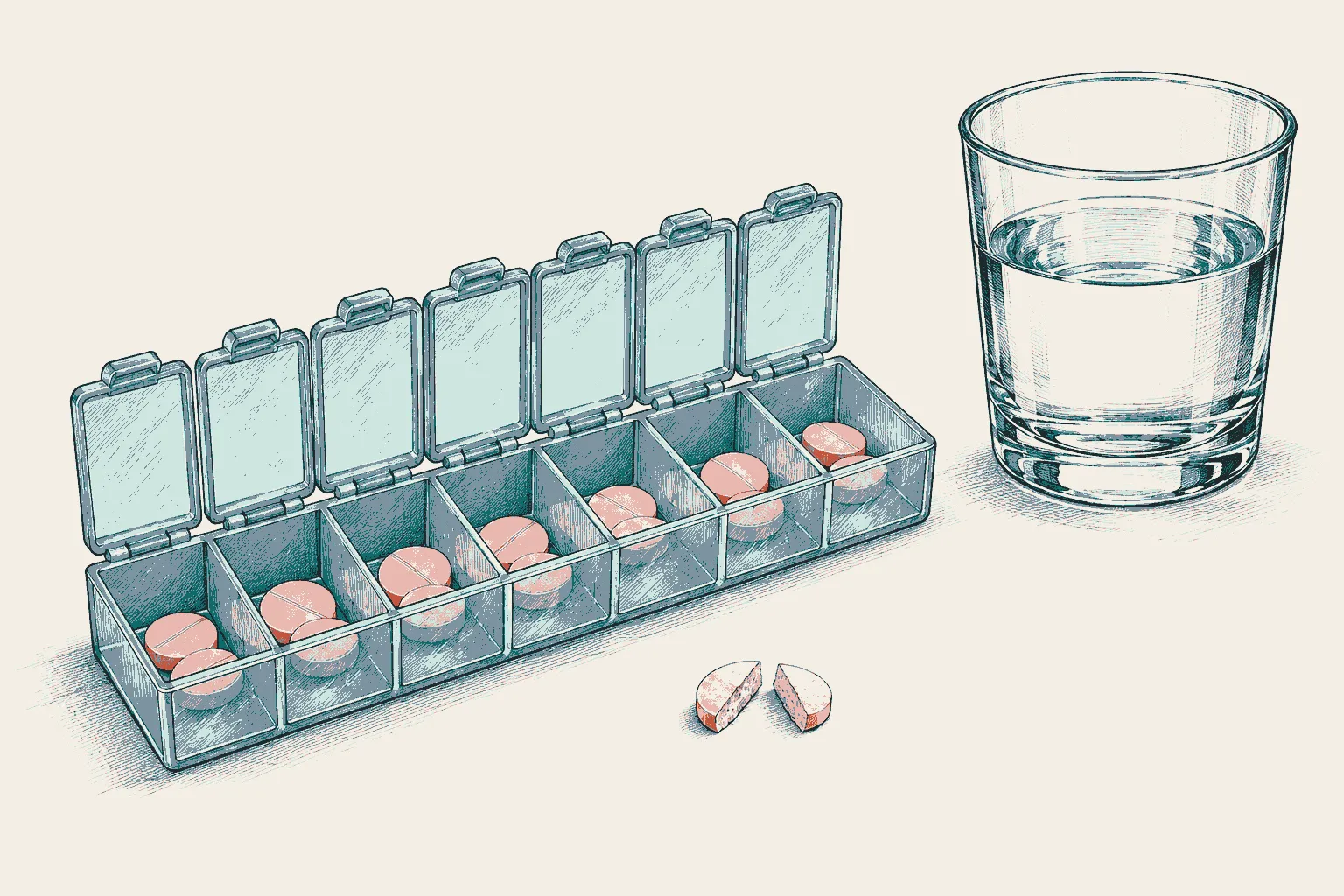
Your doctor sets your dose from your symptoms and thyroid blood tests, and changes it as those results change. The figures below come from the official product information and the NHS, so you can follow what is happening. They are not a reason to change your own dose.
Key points
- Adult starting dose: 20 mg a day (mild), 40 mg (moderate) or 40 to 60 mg (severe), split into two or three doses.
- Maintenance: usually 10 to 15 mg a day once levels are normal, often as a single daily dose.
- Children: usually 15 mg a day to start; doses depend on age and weight.
- How long: typically 12 to 18 months for Graves’ disease; some people take it for years.
- Missed dose: take it when you remember; if the next dose is due, the NHS says to take both together.
Strengths
Neo-Mercazole itself is a 5 mg tablet. Generic carbimazole also comes as 10 mg, 15 mg and 20 mg tablets in the UK, and a 2.5 mg/ml oral solution exists for people who cannot swallow tablets. You may need more than one tablet per dose. Online, carbimazole 10 mg is listed by PockDose, and 5 mg and 10 mg tablets by Yasabai and VGR Australia; order the strength on your prescription.
Starting dose for adults
The New Zealand data sheet gives these daily amounts, split through the day:
| Hyperthyroidism | Starting daily dose |
|---|---|
| Mild | 20 mg |
| Moderate | 40 mg |
| Severe | 40 to 60 mg |
The NHS describes the usual adult starting range as 20 mg to 60 mg a day, taken two or three times a day with the doses spread evenly. Large starting doses are not automatically better: in a Japanese study using methimazole, the active form of carbimazole, a rare blood side effect was more common at 30 mg than at 15 mg a day (see the studies).
Maintenance dose
When thyroid hormone levels are back to normal, the dose is reduced to a maintenance level, usually 10 to 15 mg a day, which can be taken once daily. Sensitivity to the medicine varies between people and over time, so check-ups are frequent: the product information suggests monthly reviews in the first year and every three to six months after that. The NHS describes blood tests about every six weeks at first, then every three months once stable; see blood tests.
Titration or block and replace
More detail is on block and replace vs titration.
There are two ways to use carbimazole for Graves’ disease:
- Titration: the dose is lowered step by step to the smallest amount that keeps thyroid levels normal.
- Block and replace: a higher, fixed dose blocks the thyroid completely and levothyroxine is added to replace the hormone.
A Cochrane review of 12 trials found relapse rates were similar (51% with block and replace, 54% with titration), but rashes and stopping because of side effects were more common with block and replace. Block and replace is not used in pregnancy.
How long treatment lasts
For Graves’ disease, the European Thyroid Association guideline recommends a 12 to 18 month course for adults and 24 to 36 months for children. The Cochrane review found 12 months of titration did better than 6 months, with no clear gain from going beyond 18 months in those trials. Some people choose long-term low-dose treatment instead of radioactive iodine or surgery; a randomised trial of five to ten years of low-dose methimazole found fewer relapses (see the studies). For toxic nodular goitre, carbimazole rarely leads to lasting remission, so it is often used to control levels before definitive treatment.
How to take it
- Swallow the tablets with water.
- Take them with or without food; there is no need to time them around meals.
- Space split doses evenly, for example on waking, mid-afternoon and at bedtime.
- Keep your blood test appointments: they decide every dose change.
Missed doses and taking too much
If you forget a dose, take it as soon as you remember. If your next dose is already due, the NHS says to take both doses together. If you are unsure, ask your pharmacist.
One extra dose is unlikely to cause harm. If you have taken two or more extra doses, the NHS advises getting medical advice the same day. Over a longer period, too much carbimazole makes the thyroid underactive and can enlarge a goitre, which is why the dose is adjusted to blood tests.
Stopping
Do not stop on your own. Thyroid levels rise again, sometimes weeks later. Treatment is stopped by your doctor after the planned course, usually with a check of TSH receptor antibodies (TRAb), which help predict relapse. It is also paused around radioactive iodine treatment, on your clinic’s instructions.
Switching between antithyroid medicines
- From PTU: the product information treats one 50 mg tablet of propylthiouracil as equivalent to one 5 mg tablet of Neo-Mercazole.
- To or from methimazole: carbimazole is converted to methimazole. A pharmacokinetic study found 15 mg of carbimazole matched about 9.2 mg of methimazole, so 10 mg of carbimazole is roughly 6 mg of methimazole.
Special situations
- Older people: no different dose, but the risk of a fatal outcome from the white-cell side effect may be higher at 65 or over, so warning signs matter more.
- Liver disease: used with caution in mild to moderate liver problems; not used in severe liver failure.
- Pregnancy: the lowest effective dose, under a specialist, without added levothyroxine. In the first trimester PTU is usually preferred.
Sources
Checked 15 October 2026.
- Neo-Mercazole New Zealand data sheet, sections 4.2 and 4.4 — Medsafe (New Zealand)
- How and when to take carbimazole — NHS (UK)
- Antithyroid drug regimen for treating Graves' hyperthyroidism (Abraham et al., 2010) — Cochrane Database of Systematic Reviews
- 2018 European Thyroid Association guideline for the management of Graves' hyperthyroidism — European Thyroid Journal
- Comparative bioavailability of carbimazole and methimazole (Jansson et al., 1983) — Int J Clin Pharmacol Ther Toxicol