
Neo-Mercazole in pregnancy and breastfeeding: risks, switching to PTU and planning
Is Neo-Mercazole (carbimazole) safe in pregnancy? The birth defect risk, why doctors switch to PTU for the first trimester, contraception, what to do if you are already pregnant, and breastfeeding.
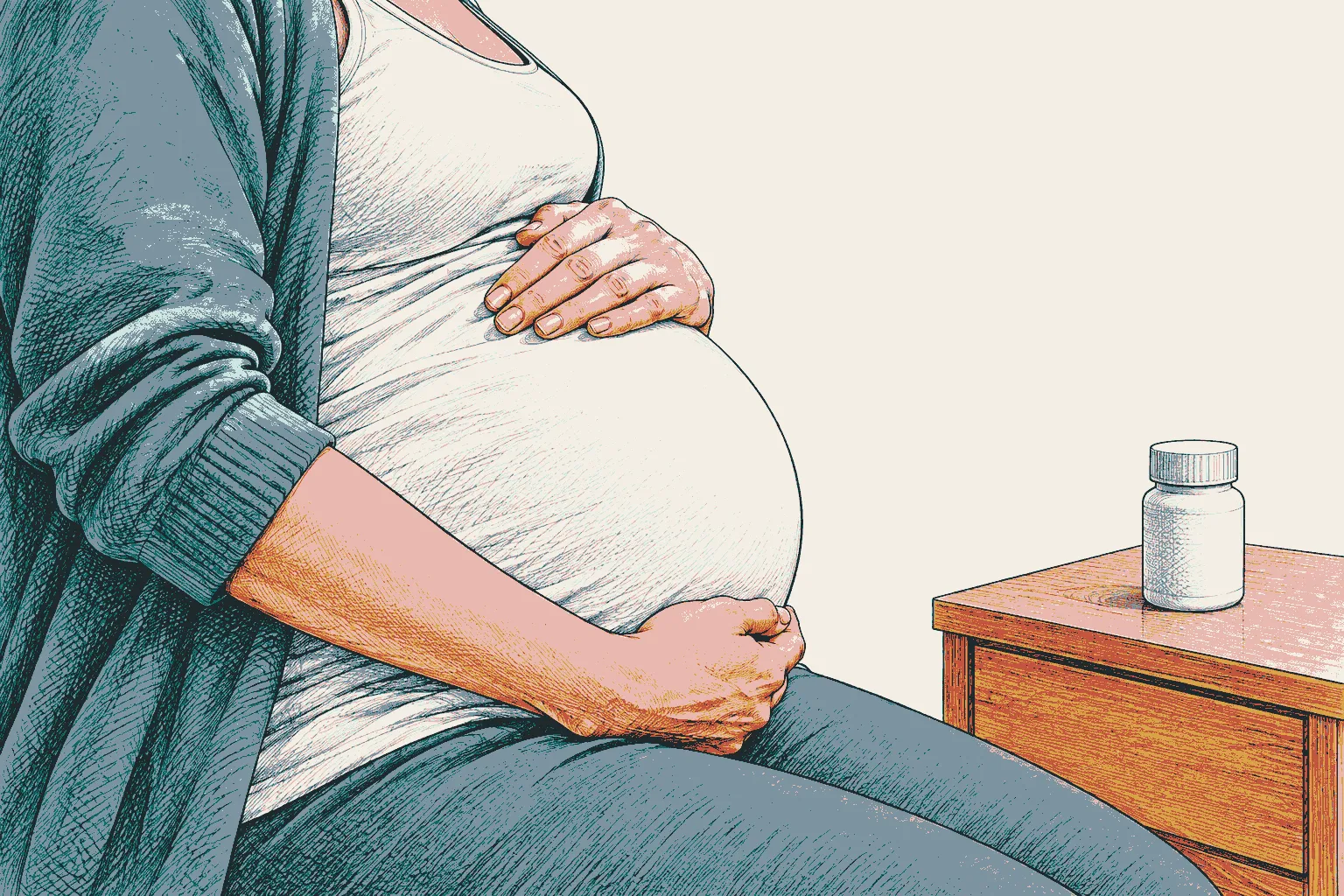
An overactive thyroid needs treating in pregnancy: too much or too little thyroid hormone can harm both mother and baby. The difficulty is that Neo-Mercazole (carbimazole) and methimazole can affect the baby’s development in the first weeks. Most of the risk can be managed by planning ahead, so this page is worth reading before a pregnancy, not only during one.
Key points
- Contraception: use effective contraception for as long as you take carbimazole.
- Planning a pregnancy: tell your doctor first. Most people switch to propylthiouracil (PTU) before trying and stay on it through the first trimester.
- Pregnant on carbimazole? Do not stop suddenly. Keep taking it and contact your doctor the same week.
- The risk is real but small: about 9 in 100 exposed babies had a birth defect in a Danish study, against about 6 in 100 unexposed.
- Breastfeeding: the NHS says it is usually fine on carbimazole.
The risk to the baby
In 2019 the UK medicines regulator (MHRA), following a European review, concluded that carbimazole increases the risk of congenital malformations, especially in the first trimester and at doses of 15 mg a day or more. The defects reported include:
- aplasia cutis, a missing patch of skin, usually on the scalp
- facial malformations and choanal atresia (blocked nasal passages)
- defects of the abdominal wall and gut: exomphalos, oesophageal atresia and omphalo-mesenteric duct anomaly
- ventricular septal defect, a hole between the heart’s lower chambers
Two very large studies put numbers on it. In Denmark, among 817,093 children, birth defects were diagnosed by age two in 9.1% of those exposed to methimazole or carbimazole in early pregnancy, 8.0% exposed to PTU, and 5.7% not exposed. In Korea, among 2.9 million pregnancies, malformations affected 7.27% of babies exposed to antithyroid drugs in the first trimester against 5.94% unexposed, with methimazole and higher doses carrying more risk. Most exposed babies are born healthy; the risk is an increase, not a certainty.
Later in pregnancy the issue changes. All three drugs cross the placenta and can slow the baby’s own thyroid, which starts working around the middle of pregnancy, so doctors use the lowest dose that keeps the mother’s levels in range. Block and replace treatment is not used in pregnancy.
Why PTU for the first trimester
PTU has its own risks, including rare severe liver injury in the mother, and it is not free of birth defect risk; the defects linked to it differ from those seen with carbimazole and methimazole, and guidelines judge that the balance favours PTU early in pregnancy. The European Thyroid Association therefore advises switching from methimazole or carbimazole to PTU when planning pregnancy and keeping PTU during the first trimester. The NHS describes the same practice. Because of the liver risk, the US PTU label suggests considering a change back to another antithyroid drug after the first trimester. See propylthiouracil.
Not everyone can take PTU. The NHS notes that for some people staying on carbimazole is the safest option, at the lowest effective dose and with close monitoring.
If you are planning a pregnancy
- Keep using contraception until your treatment has been reviewed. The NHS notes carbimazole does not stop the pill or other contraception working, though vomiting can.
- Ask about your options well ahead. Some people choose radioactive iodine or surgery before trying, so no antithyroid drug is needed in pregnancy; after radioiodine the NHS advises avoiding pregnancy for at least six months (men should not father a child for at least four months).
- If you stay on medicine, plan the switch to PTU with your doctor before you start trying.
- Book early pregnancy care and tell the midwife about your thyroid treatment.
Carbimazole does not appear to reduce fertility in men or women, according to the NHS.
During pregnancy
Expect blood tests more often than usual, because the right dose can change as pregnancy goes on, and possibly extra ultrasound scans of the baby’s growth. Poorly controlled hyperthyroidism raises the risk of pre-eclampsia, miscarriage, premature birth and low birthweight, according to the NHS, which is why the aim is steady control rather than no medicine. The Neo-Mercazole data sheet recommends a thyroid test for the newborn.
Breastfeeding
Here the sources have moved over time:
- NHS (2025): usually OK to take carbimazole while breastfeeding a healthy baby; small amounts reach the milk and are unlikely to affect the baby.
- US methimazole label: methimazole is in breast milk, but a long-term study of 139 breastfeeding mothers found no harm to their babies; check the baby’s thyroid weekly or every two weeks.
- Neo-Mercazole data sheet (2020): more cautious, suggesting not breastfeeding or switching to PTU, unless the baby’s thyroid is monitored. PTU passes into milk very little: about 0.025% of a 400 mg dose appeared in milk over four hours in one study.
Seek advice if your baby feeds poorly, is unusually sleepy or irritable, gets a rash, becomes constipated or has frequent infections.
Where to get your medicine
Pregnancy changes which medicine and dose are right, so order only what your current prescription says. Carbimazole is listed by PockDose, Yasabai and VGR Australia; PTU usually has to be filled locally. More on where to buy.
Sources
Checked 15 October 2026.
- Overactive thyroid, treatment and complications — NHS (UK)
- Pregnancy, breastfeeding and fertility while taking carbimazole (reviewed May 2025) — NHS (UK)
- Carbimazole: increased risk of congenital malformations; strengthened advice on contraception — MHRA Drug Safety Update, February 2019
- Neo-Mercazole New Zealand data sheet, sections 4.4 and 4.6 — Medsafe (New Zealand)
- 2018 European Thyroid Association guideline for the management of Graves' hyperthyroidism — European Thyroid Journal
- Birth defects after early pregnancy use of antithyroid drugs, a Danish nationwide study (Andersen et al., 2013) — Journal of Clinical Endocrinology & Metabolism
- Antithyroid drugs and congenital malformations, a nationwide Korean cohort study (Seo et al., 2018) — Annals of Internal Medicine
- Methimazole tablets prescribing information (pregnancy, nursing mothers) — DailyMed, US National Library of Medicine
- Propylthiouracil tablets prescribing information (pregnancy, nursing mothers) — DailyMed, US National Library of Medicine