
Hyperthyroidism (overactive thyroid): causes, symptoms, tests and treatment
What an overactive thyroid is, the main causes (Graves' disease, toxic nodules, thyroiditis), symptoms, the blood tests that diagnose it, and how antithyroid tablets, radioiodine and surgery fit together.
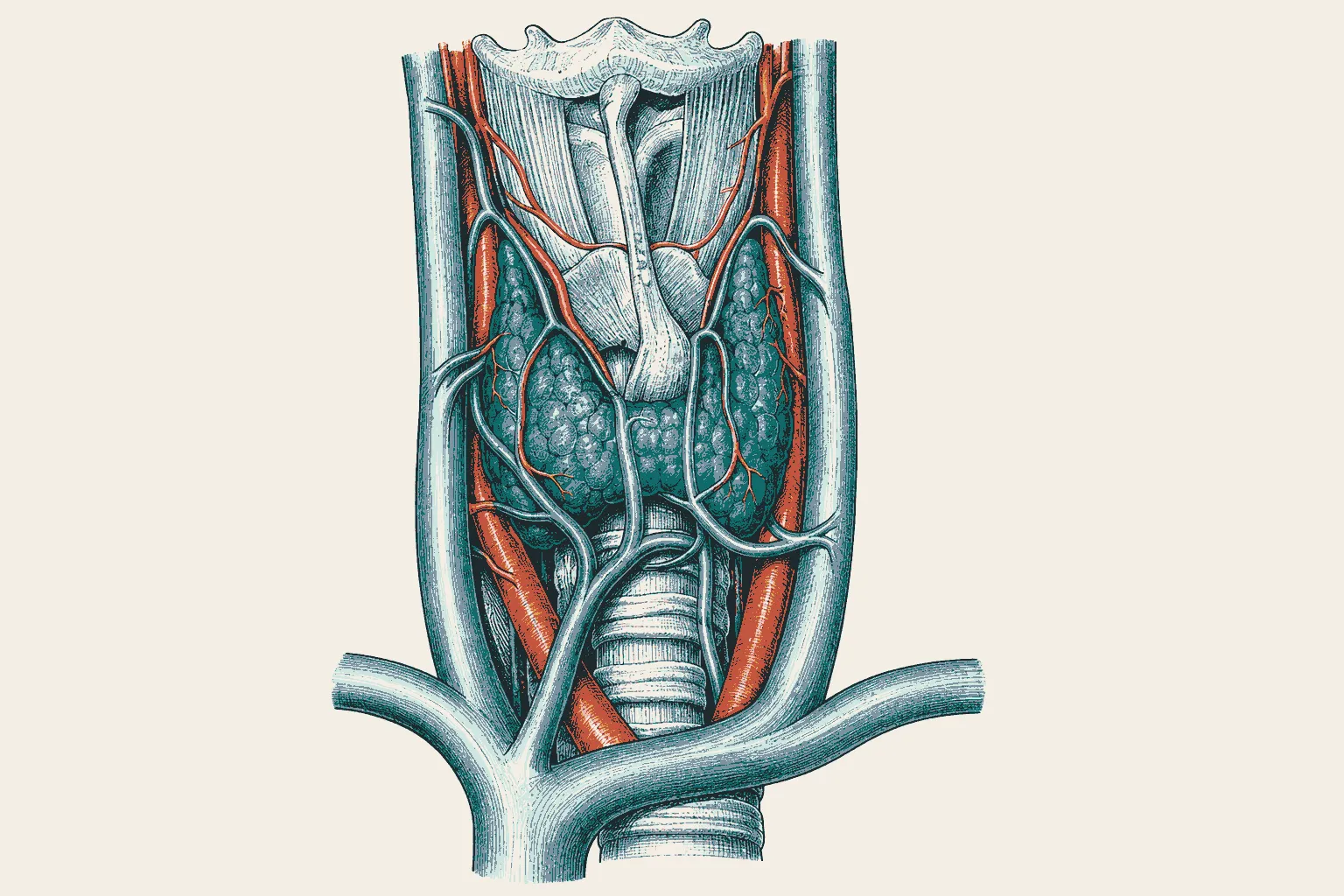
Hyperthyroidism means the thyroid gland is making more hormone than the body needs. Doctors also call it an overactive thyroid or thyrotoxicosis. It speeds up almost everything: heart rate, metabolism, bowels and mood. It is very treatable, and Neo-Mercazole (carbimazole) is one of the main treatments.
Key points
- Commonest cause: Graves’ disease, an autoimmune condition. Others are toxic nodules and short-lived thyroiditis.
- Typical symptoms: weight loss despite a good appetite, a fast or pounding heart, sweating, shakiness, anxiety, loose bowels.
- Diagnosis: a blood test showing low TSH and high free T4; an antibody test confirms Graves’ disease.
- Treatments: antithyroid tablets, radioactive iodine or surgery, with beta blockers for symptoms early on.
What causes it
The British Thyroid Foundation lists these causes:
- Graves’ disease, the most common. Antibodies switch the thyroid on and keep it on.
- Toxic multinodular goitre: an enlarged thyroid with several lumps that make hormone on their own.
- A single toxic adenoma: one overactive lump.
- Thyroiditis: inflammation that leaks stored hormone. It is temporary and usually settles without antithyroid drugs.
- Too much levothyroxine in someone treated for an underactive thyroid.
Telling these apart matters, because carbimazole helps Graves’ disease and nodules but not thyroiditis. NICE recommends a TSH receptor antibody (TRAb) test to confirm Graves’ disease, and a thyroid scan if that test is negative.
Symptoms
Many symptoms come from the body running too fast:
- weight loss despite eating more (a few people gain weight)
- palpitations or a fast pulse
- sweating and feeling hot
- tiredness and weak muscles
- nervousness, irritability, mood swings
- shaky hands
- loose bowels, thirst, passing more urine
- itching, warm moist hands
- a swelling in the neck (goitre)
- with Graves’ disease, sore, gritty or bulging eyes (thyroid eye disease)
Symptoms can be so subtle that they go unnoticed for a long time, or they can arrive over a few days or weeks and be severe, the British Thyroid Foundation notes.
How it is diagnosed
A blood test does most of the work. A low TSH with a high free T4 (and often a high free T3) means an overactive thyroid. A TRAb test identifies Graves’ disease. If the TSH is low but free T4 and T3 are normal, that is subclinical hyperthyroidism, which is handled differently. NICE advises an ultrasound only if a lump can be felt.
Treatment options
| What it does | Usual role | |
|---|---|---|
| Beta blockers (such as propranolol) | Calm the heart rate and shaking | Short term, while other treatment starts working |
| Antithyroid tablets: carbimazole, methimazole, PTU | Block hormone production | First treatment for most; a 12 to 18 month course for Graves’ disease |
| Radioactive iodine | Destroys overactive tissue | First-line definitive treatment for many adults in the UK |
| Thyroidectomy | Removes the gland | Large goitres, suspected cancer, or when other options do not suit |
In the UK, NICE recommends radioactive iodine as the first definitive treatment for most adults with Graves’ disease, but offers a choice of a 12 to 18 month tablet course instead when remission is likely, for example in mild, uncomplicated disease. For toxic nodules it prefers radioiodine or surgery, because tablets do not cure nodules and would be needed for life. Children usually take tablets for at least two years. See how the options compare.
Complications if untreated
The NHS lists eye disease, an irregular heart rhythm (atrial fibrillation), heart failure, weakened bones (osteoporosis), pregnancy complications and, rarely, thyroid storm. Treatment also carries a risk of overshooting into an underactive thyroid, especially after radioiodine or surgery, which is why blood tests continue long term.
Starting treatment
If your doctor prescribes carbimazole, the dosage, side effects and blood tests pages explain what to expect. With a prescription, carbimazole is listed online by PockDose, Yasabai and VGR Australia.
Read next
Sources
Checked 15 October 2026.
- Hyperthyroidism (patient leaflet, updated October 2026) — British Thyroid Foundation
- Overactive thyroid (hyperthyroidism), symptoms, causes, diagnosis, treatment and complications — NHS (UK)
- Thyroid disease: assessment and management (NG145), recommendations — National Institute for Health and Care Excellence
- 2016 American Thyroid Association guidelines for hyperthyroidism and other causes of thyrotoxicosis — Thyroid