
Carbimazole for cats: Vidalta once-daily tablets
Carbimazole for hyperthyroid cats as Vidalta 10 mg and 15 mg prolonged-release tablets, with label doses, the blood test schedule, side effects and how it differs from methimazole.
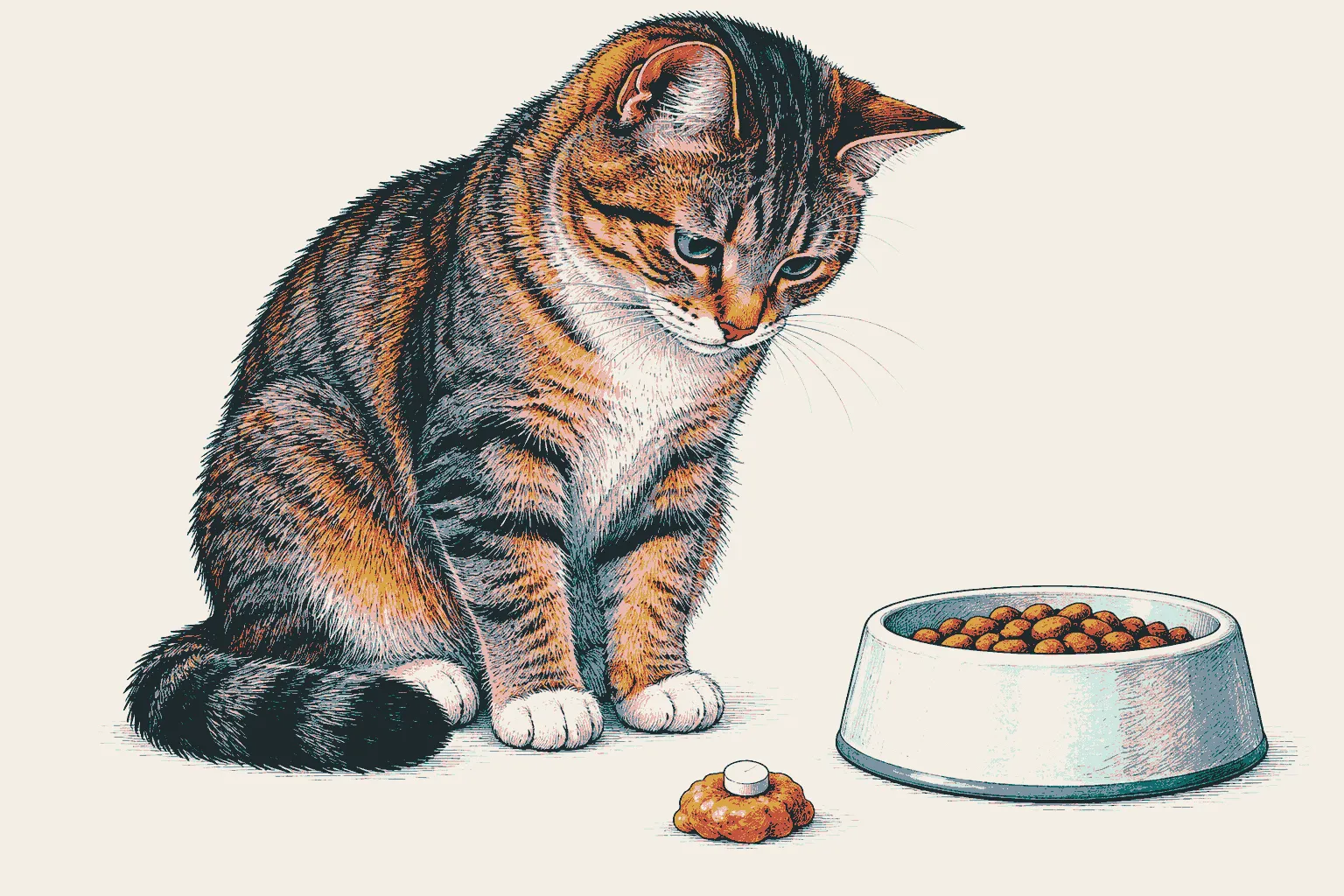
Carbimazole is the drug in Neo-Mercazole, and cats can take it too, but as a veterinary tablet built for them. Vidalta releases carbimazole slowly, so most cats need only one tablet a day instead of the twice-daily dosing usual with methimazole. It is licensed in the UK and Europe; in the US the FDA-approved cat medicines are methimazole products.
Key points
- Product: Vidalta 10 mg and 15 mg prolonged-release tablets, prescription only.
- Usual start: 15 mg once a day; 10 mg if thyroid hormone is only mildly raised.
- Maintenance: usually 10 to 25 mg once a day; some cats manage on a tablet every other day.
- Do not split or crush the tablets; give them with food at the same time each day.
- Stopping: thyroid hormone returns to its old level within about 48 hours.
How Vidalta works
In the cat’s body carbimazole becomes methimazole, which blocks thyroid hormone production. The prolonged-release tablet avoids a sharp peak: in healthy cats methimazole levels peaked about six hours after a 15 mg tablet and stayed up for longer than with a standard tablet, with about 88% of the dose absorbed. That supports once-daily dosing.
Doses on the label
The UK product information (revised March 2025) sets out two phases:
- Adjustment: start at 15 mg once a day, or 10 mg if total T4 is only mildly raised (50 to 100 nmol/L). Hormone levels can fall quickly, so the first dose change may come after just 10 days, with further checks at 3, 5 and 8 weeks.
- Maintenance: check-ups every 3 to 6 months, with T4 rechecked 10 to 14 days after any change. Most cats need between 10 mg and 25 mg once a day (25 mg means one 10 mg plus one 15 mg tablet). Some need less than 10 mg, and a tablet every other day can be enough. Increases go up by no more than 5 mg at a time; doses above 20 mg have been tried in only a few cats.
Give the tablet with food, at the same time and in the same relation to meals every day. Food improves absorption. Breaking or crushing a tablet destroys the slow release.
What the trial showed
In a study of 44 hyperthyroid cats started on 15 mg once daily, median total T4 fell from 118 nmol/L to 33 nmol/L after 10 days, and clinical signs improved or resolved in almost all cats within three weeks. After a year the median dose was 15 mg a day (range 5 to 25 mg). During treatment, 25% of cats showed a rise in blood urea, 20% eosinophilia and 16% low lymphocyte counts.
Monitoring
Treating the thyroid can lower kidney filtration and reveal kidney disease, and can raise liver enzymes. The label asks for kidney and liver tests and a full blood count before treatment and at each follow-up visit. Any cat that suddenly seems unwell on Vidalta, especially with a fever, needs blood tests straight away.
Side effects
The label lists side effects as rare (1 to 10 cats in 10,000): vomiting, diarrhoea, raised kidney or liver values, anaemia and other blood count changes, itching or hair loss, weight loss, lethargy, poor appetite and fever. Blood changes are most likely in the first four to six weeks and usually settle within a month of stopping. Skin itching is usually mild and treatable without stopping.
Vidalta should not be used in cats with severe liver disease, diabetes, autoimmune disease, low blood cell or platelet counts, clotting problems, or a past reaction to carbimazole or methimazole.
Can a cat take Neo-Mercazole?
Neo-Mercazole and other human carbimazole tablets release their dose quickly and are labelled for people. A vet may sometimes prescribe a human product when no veterinary one suits, but the dose, the frequency and the blood test plan must come from them. Never share your own tablets with your cat. The cat overview explains why the FDA warns against unapproved online “generics” for cats.
Carbimazole or methimazole for your cat?
Inside the cat they end up as the same drug, so the choice is mostly practical. One Vidalta tablet with breakfast suits a cat that takes pills easily and an owner who is out all day. A cat that spits out tablets may do better on a methimazole liquid, or on gel rubbed into the ear, and methimazole tablets come in smaller 2.5 mg steps for fine-tuning. Kidney disease, other medicines and your routine all feed into what your vet picks.
Sources
Checked 15 October 2026.
- Vidalta 15 mg prolonged-release tablets for cats, summary of product characteristics (March 2025) — Veterinary Medicines Directorate (UK)
- Vidalta 10 mg prolonged-release tablets for cats, summary of product characteristics (March 2025) — Veterinary Medicines Directorate (UK)
- Clinical efficacy and safety of a once-daily formulation of carbimazole in cats with hyperthyroidism (Frénais et al., 2009) — Journal of Small Animal Practice
- Pharmacokinetics of controlled-release carbimazole tablets support once daily dosing in cats (Frénais et al., 2008) — Journal of Veterinary Pharmacology and Therapeutics
- Hyperthyroidism in cats, two FDA-approved drugs available to treat it — US Food and Drug Administration