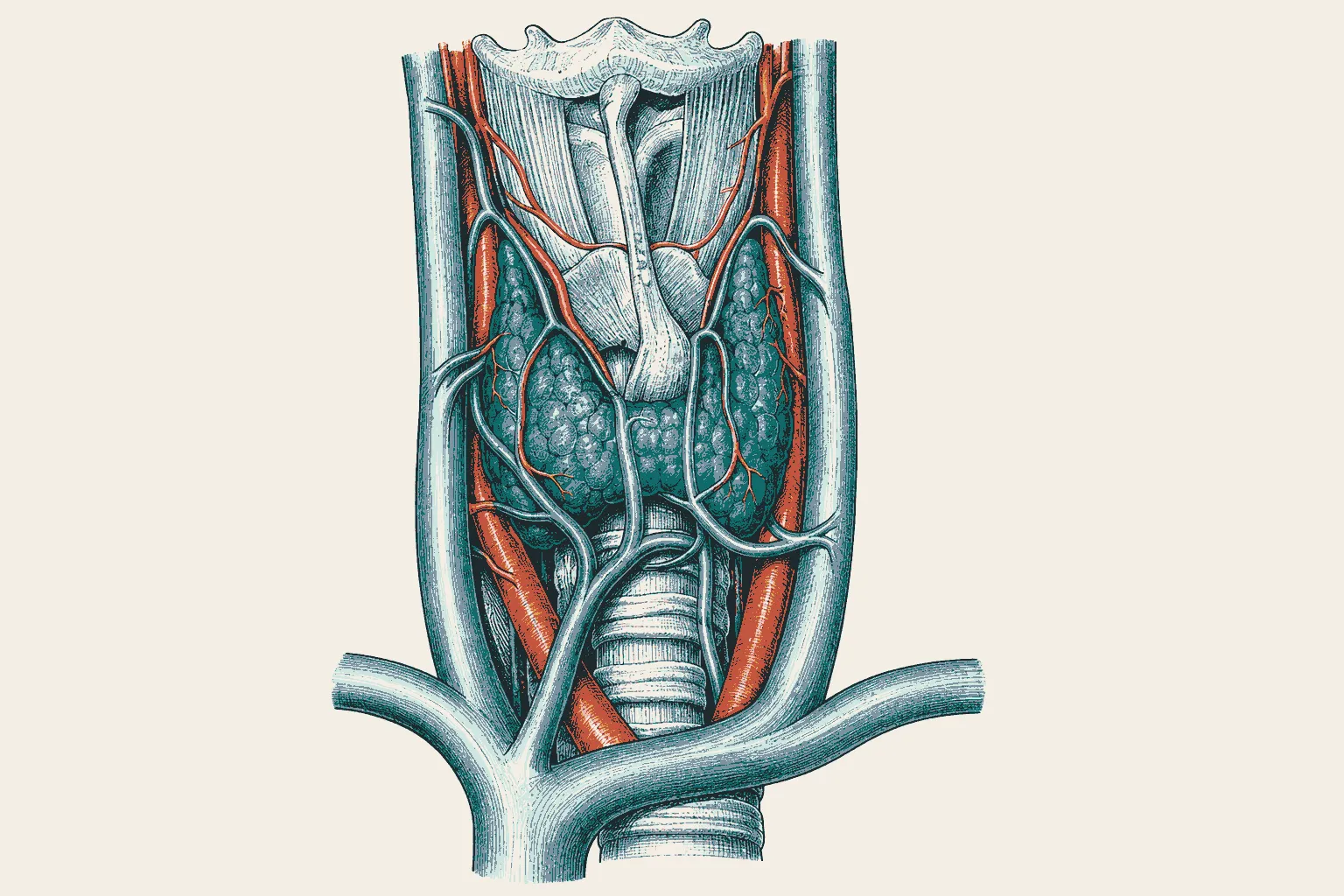
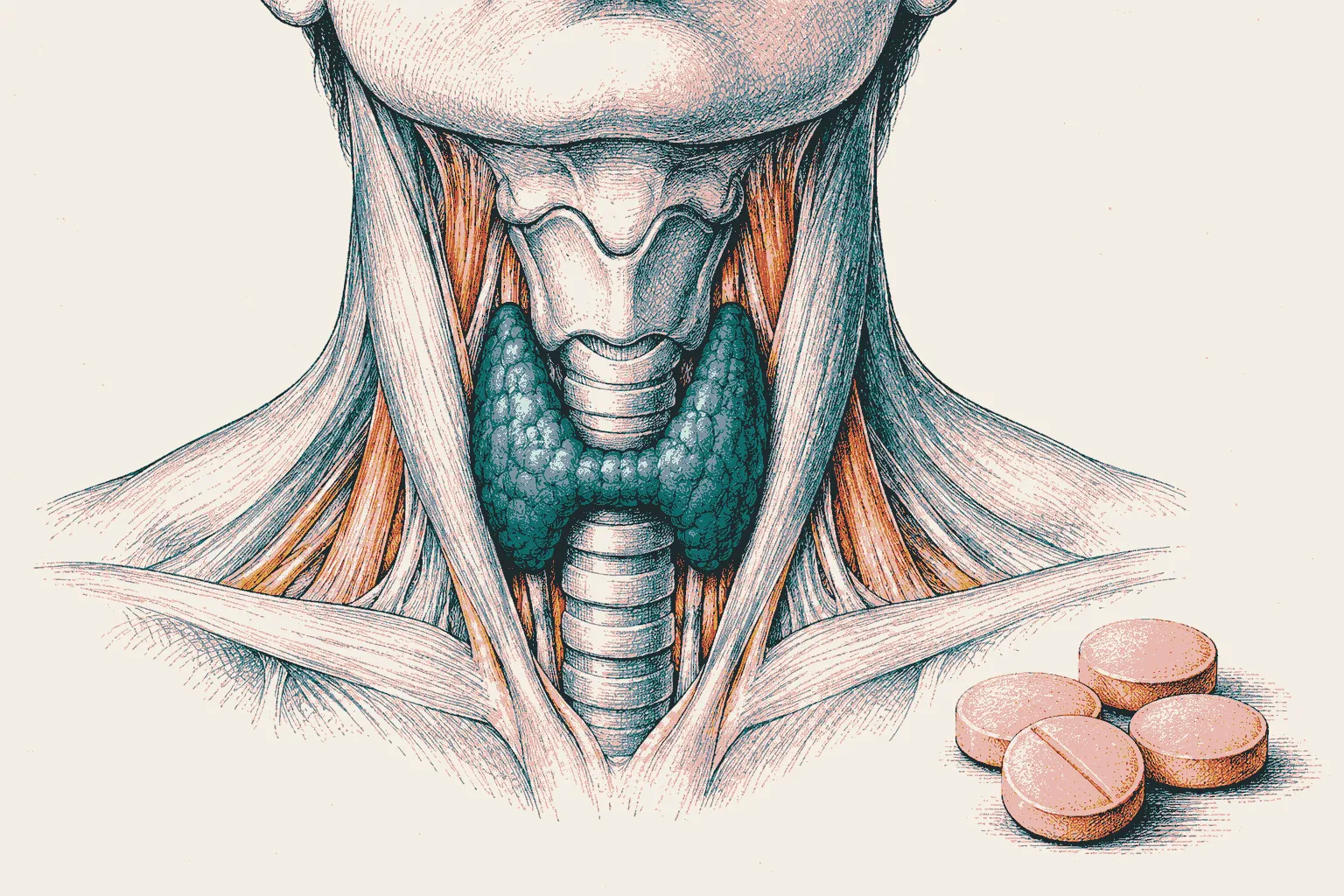
What an overactive thyroid is, the main causes (Graves' disease, toxic nodules, thyroiditis), symptoms, the blood tests that diagnose it, and how antithyroid tablets, radioiodine and surgery fit together.
Medicines that interact with Neo-Mercazole (carbimazole) and methimazole, including warfarin, digoxin, beta blockers, theophylline, prednisolone, erythromycin and clozapine, plus iodine, biotin, herbal remedies and alcohol.
Methimazole, also called thiamazole, is the active form of carbimazole. What it treats, US label doses for 5 mg and 10 mg tablets, side effects, pregnancy, interactions and the old brand name Tapazole.
Neo-Mercazole is a brand of carbimazole, an antithyroid tablet for an overactive thyroid. Uses, generic and other names, how it works, dosing, side effects and alternatives.
Is Neo-Mercazole (carbimazole) safe in pregnancy? The birth defect risk, why doctors switch to PTU for the first trimester, contraception, what to do if you are already pregnant, and breastfeeding.
Propylthiouracil (PTU) 50 mg tablets for an overactive thyroid. Why it is second choice after methimazole and carbimazole, why it is still used in early pregnancy, doses, liver and vasculitis warnings.
Radioactive iodine (I-131) treatment for Graves' disease and toxic nodules, when to stop Neo-Mercazole (carbimazole) before and after, safety precautions, pregnancy timing, eye disease and the long-term underactive thyroid.
Side effects of Neo-Mercazole (carbimazole), from nausea, rash and hair thinning to rare agranulocytosis, liver injury and pancreatitis, plus pregnancy risks and interactions.
Plain-English summaries of the key trials and large studies on carbimazole and methimazole, covering treatment length, dose, agranulocytosis, pregnancy, PTU and radioactive iodine.
Subclinical hyperthyroidism means a low TSH with normal free T4 and T3. What causes it, the heart and bone risks, when guidelines suggest treatment with carbimazole or radioiodine, and how often to recheck.